Wednesday, February 4, 2009

Travel Blog #17: Meeting the Meeting of the Rivers

I keep trying to come up with openings to these blogs that don't sound trite.

I could try something like "There we were, sitting in a mud bog sipping V8 juice with seventeen naked pygmies." But that never happened and I would have to be a much better writer than I am to sell something like that.

But I am trying to convey the feeling that is unique to the Amazon, the sense it engenders in your heart. Simply being there is an experience.

Think of it like a tropical theme "Alice in Wonderland." People do the most remarkable things because this is a wholly remarkable place. It's all a result -- a direct result of the magic in the air, on the water. It reaches out and ignites the magic residing quietly inside your own spirit. It's peaceful and breathlessly exciting at the same time...and it's frustrating because I don't have the words to convey it to you.

Take a look at the opening picture. This guy has put a rock in the back of his canoe so he can sit at the front. I am sure there is a perfectly good reason for this although I have no idea what it might be. I suppose the thing I'm trying to say is that the whole place is different than anywhere else.

There is Amazon magic. I promise you. There’s a certain something that happens in your heart when you are adrift on this river. It fills your mind and spirit with something as unique as the taste of fine dark chocolate. It suffuses your being with a thing both mysterious and mystical.

We got off our Manaus bus, escaping the tour guide who was not even attempting to pretend he wasn't glaring at me, and walked down a short pier to the waiting riverboat.

Our party was herded into the upper deck by a little guy who couldn’t possibly been more than five feet tall. He introduced himself as “Eni” – which he pronounced as “Any.” He crackled with energy and he announced he was going to be our guide for the rest of the day and into the night.

I started up the stairs, wanting to get stake out the best seats for Sheree and me before the greedy people got there.

“Where are you going?” she asked.

“Up,” I answered, although since I was standing on a narrow staircase, I thought this would be obvious.

“Why?” she asked.

“Well…that’s where we’re going.”

She looked at me with a distantly pitying eye that I always find a little irritating…mostly because it usually means I am acting like a herd animal.

“You’re acting like a herd animal,” she confirmed. “Look around down here. We have the whole floor to ourselves. We can go anywhere. Would you rather be squeezed up there like a sardine?”

I paused uncertainly, wondering if there was any possible way to save face at this point and decided there was not. I stepped off the ladder and sauntered to the wooden bench, like it had been my idea from the beginning.

“We’ll stay down here,” I said with all possible male authority.

Sheree rolled her eyes and for the balance of the trip, we hung out on the lower level.

Just before a second busload of tourists climbed up to the second floor, a man toting an enormous plastic barrel appeared. The barrel was filled with plastic cups and the plastic cups were filled with something that looked like long, tapered potato chips.

"What are those?" I asked, noting the entire riverboat crew had purchased at least one of the containters for an american dollar each.

"Banana chips," he said. "Salted. One dollar."

I bought some. Sheree bought some and they were delicious. So there we were, cruising down the Amazon, noshing on lightly salted banana chips (which tasted like fruity potato chips to me) and in a place of pure bliss. Uncrowded. Downstairs was way "more gooder." Sheree was right. But don't tell her I said so.

Shortly after we left the dock Eni came down and looked at us for a long moment. I had a sense of deja vous. We were being identified as the “problem people” again. I didn’t want that to happen so I looked at Eni and explained that we wanted to be free to take pictures.

He looked at me for a long moment. I could see gears turning in his eyes and then he smiled broadly. “You know something? If I were you, I would stay here too.”

From that second, in that inexplicable way people have, we were friends. It was done. He looked at me and I looked at him and we understood each other perfectly. I smiled a little and so did he. He almost winked. It was a great moment.

And so Sheree and I were left mostly alone on the lower deck of a riverboat cruising the Amazon. It was wonderful. A gentle breeze blew through the lower deck and I had the illusion that we were all alone on the Amazon…exactly where we wanted to be. Occasionally another boat would fly by and we would look at it and maybe take a picture. Then the magic happened.

It was one of those perfect travel moments: one that will live in my mind forever. I have a number of these. In Alaska we rounded a corner and saw bald eagles soaring around the cross on a church, sublime moments in the profound peace of Fern Grotto in Jamaica, midnight in St. Marco Square in Venice – way too many to write here.


But travel magic was happening only a few feet from where we were. Wordlessly, I pointed out behind Sheree. She turned and saw the magic too. Let me explain what is happening in the picture above. I have only adjusted the contrast a little – otherwise it is exactly what we saw: two rivers, two colors travelling side by side in perfectly separate courses. It is called the “Meeting of the Rivers.” Two chemically different bodies of water meet and flow side by side – but never together.

Eni appeared, holding two small bottles of water. One was light brown. The other was blue. He laughed at both of us gaping at the impossible scene unfolding before us.

"Two completely different compositions of water. Different ph balances, acidity. These are two completely different waters one beside the other."

He smiled at us and I started taking pictures.

NOW can you try to tell me we are not talking about a magical place?

I took picture after picture of this impossible thing happening before my eyes. I am a professional magician, and if I could bottle this effect, I would make a Manaus-sized fortune. It’s a complete impossibility, which (in the final analysis) is what magic is all about.

In that instant I felt something strange – something that will offend some of you. But I felt an urge to fall to my knees before the God that had created this impossible thing, a God who built the vibrant life of the Amazon from monkey to “fat little guys” on Devil’s Island. In that instant I felt very small before my Creator and I had an urge to hide my face. Hard to explain – but it’s what was going on inside me. How does a visual of two rivers running side by side invoke that reaction? I don’t know. But it was intense and tender and precious to me.

The boat continued down the Amazon. Sheree claimed the fore deck. I called her “Rambette” because of her sweatband and military look. She didn’t care. Actually I think she kind of liked it.

Eni joined us and for the next hour or so we chatted amiably about his life in Manaus. He speaks seven languages. He loves his area of the world and he loves showing it to tourists. Sheree immediately began talking with him about the option of planning a photographers’ tour of Manaus. He understood right away and started talking about the many options available.

I liked this man more and more. I eased myself off of the bench and settled in beside Eni and Sheree at the very front of the boat. We talked about Manaus. The ship captain produced a package of cookies and we ate and talked and laughed together as though we had known each other for decades. It's just that way in the Amazon. I've noticed time and again the easy way people talk, the way people choose to be together.

We talked about our lives in Edmonton. We talked about the literal beauty as the Amazon showed itself to us. He had grown up on the Amazon, but Eni was still as in awe of what was out there as we were.

I wish you could have been there for only a few moments. You would first notice the scent in the air. It is quite unlike anything else you may have past experience with. It is so very alive. The scent itself is like nothing else: green and pulsing with life. I'll try to give you a better sense of what it was like to be there when I tell you about the walk into the jungle in the next blog.

Along the shorelines are people and animals. The clouds are vibrant and turbulent blues and greys and whites, in constant lazy state of motion as though God was gently blowing on them. And all around you is the sense of life and the loud heartbeat of the Amazon. It resounds in your spirit like a drum. It speaks to your heart and whispers that this is where you came from and that this is the garden of the world.

Flowery? Yes.

But intense and precious.

I would not trade my memories of that river ride for anything this world has to offer. Well. Almost anything.

We were headed for the deep Amazon. We were going for a long hike in the literal jungle. Nothing tourist here. We are talking pure Amazon.

The walk into the Amazon jungle was more astounding still. That story is next.

Tuesday, February 3, 2009

Travel Blog #16: Manaus Morning

Have you heard of Manaus?

I hadn’t until shortly before we left and I traced my finger on a map down Brazil’s Amazon River to Manaus with the breathlessly excited thought: “I’m going there.”

Manaus was once the richest city on the planet. Henry Ford wanted to exploit the rubber trade – and business tycoons by the dozen were created here. The expression: "Lighting your cigar with one hundred dollar bills" was birthed here too…because they made a point of doing it.

Not much of that grandeur remains today. There’s the Manaus opera house of course: Italian marble, handcrafted décor. It is said that the small road out front of the opera house was covered in rubber so that the carriages rumbling by with their loads of rich music fans wouldn’t make a sound on the cobblestones and so disturb the patrons within.

Manaus is a place of stark contrasts: there are opulent mansions still – and ramshackle slums of abject poverty. One point eight million people live here in relative peace.

The ship pulls slowly into the port and I stand on the balcony savoring the moment because I know this will be the last time for this trip that I am on a moving ship. We dock here and stay overnight. But tomorrow we leave. Our bags are packed and they sit like 900 pound gorillas in the middle of our stateroom.

I don’t dwell on it too long because it’s not a day for those kinds of thoughts. It’s a FULL day excursion. We’re going to take a tour of the town. We are going to have a look at the opera house. We’re going to take a river ride – and then go on a walk through the jungle to a real Amazon village. We are going to finish the day by going out onto the river in the dark of night hunting caiman – the indigenous alligators.

Who could be sad with all that coming up? (You just shush.)

We file off the ship with bright orange stickers on our shirts. They say “H3” in big letters. They identify us as tour members but they annoy me to no end for reasons I cannot articulate.

The bus is waiting and as we step from ship to bus, I have my first misgiving. We are being handled and I wonder if we will ever be allowed to see the real Brazil. I don’t much want to be insulated.

But I was on my way to a day I will remember for the rest of my life. It was a day when Brazil, in all it’s electric beauty touched me.

Sheree and I pile into a tour bus. It’s an odd bus because it has a locking door between the passengers and the driver. It creeps me out at first – but the guide, a pinch faced little man, explains that the door exists so we can enjoy air conditioning.

…okay, I think…

There are only ten of us on the bus – so I spread out on the back seat. I can shoot out of either window as we travel and I do. Manaus is a riot of color and people and activity. There are signs and cars and bustling commerce. The streets are choked with people and buildings. Music is played loud on every corner and there’s an affable disorder to it all.

It’s raining steadily and I shoot out of the windows and try to make the rain work for me. There are some wonderful bokeh effects that just occur when you focus on the drops and let the background blur.

We arrive at the Manaus opera house and the guide puts on his serious face. He looks at us, every one of us, directly in the eye and raises a finger. I have a flash memory of school field trips.

“We were not allowed to bring tourists into the opera house for a very long time,” he says. My ears have adjusted to his heavy accent and I can actually understand most of what he says now. “The opera house is very par-tic-oo-lar (this is the word, yes?) about people inside. You may take photos,” he pauses to look significantly at Sheree and me – as we have already been identified as ‘potential problem photographers’ – “But no flash photography. They get, how do you say, very irr-ra-tet-ed. The flash destroys paint. If you do not know how to put your flash off, give me your camera and I do it for you.”

He pauses again and looks pointedly at me. I smile disarmingly. My smile says “I know my camera, pal. You may trust me. Besides, you will only be able to get it by prying it from my cold dead fingers.”

He arches his eyebrows, still looking at me. I nod. I smile. He looks away. Finally.

There is a courtyard beside the opera house. It is a complex black and white tile, designed to simulate the ebb and flow of waves on the ocean. The guide drones on and I stop to take pictures of it. Frankly, the mosaic is much more interesting than the talk…and I am feeling a little teenager-ish from the unspoken rebuke. Like I don’t know how to use my own camera. Pffft.

We enter the opera house and it is grand, indeed. There are rooms in this place that took fifteen YEARS to complete. Stone, marble, wood – textiles were brought in from all over the world. There is a rumor that Caruso sang here. The real story is that someone said “malaria” to him, and he took off.

We go through the lobby and into the theater. There’s low light here – and I suppress my flash – and crank the ISO. I start shooting.

There are things that happen with technology that seem too precisely timed to be pure happenstance. This has never happened before or since but as I raised the camera to my eye to take the seventh image, the flash goes off.

There is a collective gasp from the assembled group and the guide is glaring at me. I hold up my hand to acknowledge that I am the Flash Criminal and will take sure and certain steps to correct the situation. The gesture asks for mercy from the Opera House Police. The guide nods tightly and continues talking about something. I suppress the flash again and continue shooting.

Have you ever seen what a camera does when it is trying to focus on something in low light? The flash goes off in tight sharp bursts.

For no apparent reason, a circumstance I have not been able to repeat since that day, a bursting flashing “HEY EVERYONE! Look at me for I am the moron with THE OBNOXIOUS FLASH” screamed into the otherwise hushed silence. After what seems like several years, the panicked responses from my brain, reach my finger and I lift it off the shutter button. The flashes stop, although their presence resounds with echos of light in their wake.

I do not often feel a flush burning my cheeks. But I did then.

“See? You really should read your camera manual,” chides Sheree helpfully. She seems to be enjoying this just a little more than she should.

I am about to respond with something both flushed and cutting when there is a whoosh of air and the guide is standing beside us with a horrified skeletal grin frozen on his face.

“Do you want me to rip that camera out of your hands, you bottom-feeding lowlife stupid tourist waste of skin?” his expression says.

“Can I help you turn off your flash?” he asks through clenched teeth just behind the fake smile.

“No,” I say. “I’ll do it.”

He stands there while I suppress the flash…again. To this day, I have no idea why it was flashing. I change the setting to Shutter Mode and turn the flash off.

He luxuriates in one last “I will feed you your own liver if you continue to embarrass me” fake smile and then he turns on his heel and stalks away. His manner makes it obvious there are far more worthy people who deserve his attention.

I sit in my seat. Low. I point the camera down at the floor and half press the shutter button, just to check. Nothing. It focuses. No problem. No flash. I heave a sigh and remind myself that all technology is inherently evil.

I see a wall ornament I like and I turn the camera toward it. Tentatively I press on the shutter button. There’s a crisp click as the flash pops up, ready to do it's job. No. Not ready. EAGER.

Shit.

Shit shit shit.

Shit.

I mutter something else unkind and wander out of the theater into where there is more light and less intense scrutiny.

Next is the room that took fifteen years to build. I wonder if we will be allowed to actually walk on the floor.

I meant it as one of those little jokes I tell myself -- but it turns out we weren't going to be allowed onto the floor.

See the people here? We were all issued booties lest our unclean feet scuff the woodwork.

Having said this admittedly snotty thing, I must say this was one very cool room. It dripped elegance and money in equal amounts. The bootie things were huge (one size fits all, I suppose) but the result was that if you wanted to get from point A to point B, you needed to move in little shuffling steps. I was thinking of zombies in search of human brains to devour...or vastly overmedicated patients on a day pass from The Home.

If your bootie slipped off, you were screwed -- because you'd have to balance like a stork on one leg until you got your foot back in. I know this from personal experience. Most of the tour group was already conditioned to keep one eye on me for the next entertaining thing that I would do.

I didn't care. I took lots of pictures for the sheer joy of taking pictures. Sheree and I both saw an ornate mirror and seized the opportunity to take our portraits at the same time. Unfortunately we can’t get our booties into the shots.

As we leave the opera house, the rain is falling in a steady drizzle, and I go back to the wave thingie courtyard to finish my pictures. The rest of the people follow the guide.

Sheree is waiting by the bus.

We both wait there. It seems to be taking a long time.
I take a hard look at the bus.

“This is where it dropped us off, right?” I ask.

Sheree rolls her eyes. “Yes, Dave.”

We stand there some more.

“I’m going up this way for a minute,” I say. I have begun to suspect this is not our bus, but I don’t want to say anything in case I am wrong. (I am frequently wrong.)

I walk across the courtyard and peer around the corner of the opera house. The guide is standing there in the steady rain in beside our bus.

Crap.

He has obviously been looking for me because he sees me right away and begins waving his arms wildly to attract my attention. I presume he thinks I am so deep in my idiot stupid tourist fog he must take extreme measures to get my attention.

I wave back in my most carefree manner and saunter toward him.

“We were waiting by the wrong bus,” I say.

His look, of course, says something completely different than what comes out of his mouth. On the off chance children will be reading this, I won't attempt an interpritation. But the visual message was a stark contrast to the words spoken which were: “No problem…sir.”

He decides to have the bus drive around the block to pick up Sheree and we walk together in silence.

I think he probably still hates me.

That’s the morning. We’re on our way to a river ride next. I don’t know it – but we are about to meet one of those Wonderful Life Characters…and lay the groundwork for coming back here one day.

The river ride is spectacular. I’ll tell you about it tomorrow.

Monday, February 2, 2009

Blog #15: Befriending Boca

Boca de Valaria didn’t exist thirty years ago. It is a creation of the cruise ship companies. “Boca de” means “Mouth of” and Valaria is the river it’s located on. The cruise ships needed needed a place relatively central that they could build into a viable stop for the thousands of wallet-toting tourists destined for this port each year.

The locals were pleased to accommodate. This is why they come from seven small villages each day the ship comes in.

“Don’t let it freak you out when the kids come up and hold your hand,” declared Hutch, the destination expert on the Pacific Princess. (He has undoubtedly dealt with plenty of freaked out personal space conscious North Americans before.) “They are wonderful people.”

You’d think that with this sort of background that I would hate this place.

I didn’t. I loved it. Honest.

The people there were wonderful, once I got to know them a little. “Getting to know them” means realizing that they are hospitable, pleasant people who make a living by showing off themselves and their village to the tourists. They come up to you, smile and take your hand. You can expect to be gently mobbed when you arrive…and if you relax and remind yourself you aren’t in Kansas anymore, you are in for a wonderful travel experience.

We were, of course, first off the tender boat. The locals were clustered tight at the makeshift pier, almost like someone was paying them to make EVERY tourist feel welcome.

We’d researched this port from home and learned many tourists bring supplies for the local school with them. This seemed a win/win situation for everyone. The tourists get to feel good and the kids get school supplies.

Since Sheree and I entertain kids for a big portion of our living, we decided to make them balloon animals. Balloons pack flat and I have yet to meet a kid who doesn’t love them.
I’d loaded my pockets with balloons and when we got to the end of the “love gauntlet,” Sheree looked at me and said “No time like the present.”


I pulled the first balloon from my pocket. Have you ever seen fish in an aquarium at feeding time? You need simply stand above the waterline holding the tin can and the fish cluster to wherever their little fish brains tell them you are going to be dropping the food.

It was like that. I was immediately surrounded by little people saying “Me! Me! Me!”

I asked them to move back a little and they did – but hands kept reaching even though they had no idea what they were reaching for. The balloon was taken out of my hand before I blew it up. I found myself looking into the large brown eyes of the culprit: a kid of about seven. I smiled. He looked back seriously. I tried to pry his fingers off the balloon. He regarded me evenly and didn’t loosen his grip. I ruffled his hair and pointed to the balloon and then at him. His eyes narrowed with suspicion. Finally, reluctantly, he let go.

I blew the balloon up and made a dog. The kids pressed forward. I think piranha fish learned their techniques from them. I blew on the tail and immediately a bubble of air appeared there. The kids took a collective step backward. There were collective “ooooo” and “ahhhhh” sounds. Then they all pressed forward with renewed cries of “Me! Me! ME! ME!”

I made balloons for about twenty minutes and noticed they were going down far too quickly. I felt something brush my thigh. (It has been my experience from my admittedly limited Amazon exposure that whenever you feel something touching you, you need to investigate right away.) I found a small brown hand in my pocket. The kid had been swiping balloons the whole time.

I closed my hand around his wrist and shook my head. He didn’t let go. I looked up and saw some of the teenage boys standing nearby, laughing and trying to blow the balloons up. No guilt. No one saying “gee, sorry, Mister. I don’t know how this balloon wound up in my hand…”
I was, of course, in their house. If they wanted to swipe the balloons I’d already planned to give to them for free, that was their choice.

I made balloons until they were gone – and kept my pockets zipped.

Boca is a wonderful place to meet people. Parents dress their kids in traditional costumes and you can take their picture. Usually you pass them a dollar for this – which is fine with me, since I usually do that anyway. Everyone will pose for a dollar: the kid with the tarantula, the little girl with the lizard, the man with a jungle pig. These kids handle wildlife with the same ease you would pick up a Coke.

The strange thing is that, while the wildlife is interesting, the real pictures are of the people who live here. Great faces – great clothes. Such colors! And they are literally lined up, wanting you to take shots of them.

While I agree that you don’t get the candid shots you’d prefer – I must also say that the tight crops of great photos are the real gift. For about twenty dollars, I got enough photos to keep me happily Photoshopping for some time.

It started feeling just a little creepy just once. I saw a young girl, maybe fifteen. Very pretty – wearing very little. I saw a number of the cruise ship guys pay a dollar to pose with her. Nothing off color – but it was creeping me out.

Sheree was approached by a lovely older woman who wanted her to take her for a canoe ride for five bucks. She was gone instants later and I didn’t see her again until the end of the day.

She had a wonderful time. On her ride she was taken upriver and shown a couple of villages, one of which had a modern looking school with old but still usable computers. Sheree says she was taken care of like an honored relative.

I took a walk into what the villagers call “The Nature Trail.” It goes about two miles into the jungle. As I stepped onto the trail a young teenager fell into step beside me.

He jerked a thumb to his chest: “Vincent.”

I pointed to myself “David.”

“You want to see?” He asked gesturing to the trail ahead of us.

I thought about it and realized he was offering to give me a tour.

A man tapped me on the shoulder and with a long sideways look at Vincent he spoke out of the corner of his mouth: “They are just looking for a hand-out. Don’t encourage them.”

Instantly I disliked this guy. People forget that they are guests in another country – and there was no way I wanted Vincent to see us all as tourists and not travelers. I believe there is a basic and profound difference between the two.

I nodded and clapped Vincent on the shoulder: “I see.”

“Keep one hand on your wallet,” warned the guy as we walked away.

I doubt Vincent heard or understood the exchange. If he did, he didn't show it. But the hostile look of the man bristled with suspicion in a language that is universal.

Vincent led me down the trail. I gather it was an old riverbed. He stopped every once in a while to show me the cocoa beans, bright flowers and wildlife. He kept pace tied to mine and I was surprised again at the easy hospitality of these people. They treat their guests with respect but there’s such an easy grace to what they do and the way they do it.

I was blown away again by the life all around me. The sweet scent in the air, the constant motion in the bushes -- the lushness of everything. Vincent, walking through the jungle seemed an extension of all that life, whereas I was patently a visitor here.

He stopped in the middle of the trail and beckoned me over: “Simbolah,” he said, pointing to a tiny brightly colored frog. A macro lens would have been needed to get a shot. But it was a glorious creature. I just enjoyed looking at it for a moment.

Vincent looked at me expectantly: “Simbolah,” he said again. “How you say this?”

“Simbolah,” I repeated.

He laughed out loud and I laughed too. I noticed that many Brazilians cover their mouths when they laugh.

“No, no. How YOU say?”

A light dawned. ‘Oh-ho!’ I thought, which is what I usually say to myself when the clouds clear and I finally understand the actual question. You should try it sometime. Just give yourself a hearty “Oh-HO” to promote cognitive function.

“Frog,” I said, deliberately omitting the “oh ho” stuff, since that would only confuse the issue. “We say ‘frog.’” (I will admit, however, that the notion of a young man in the Amazon jungle saying "oh-ho" to tourists entertained me for an unreasonably long period of time.)

He looked at me thoughtfully.

“Frog,” he said thoughtfully. “Frog.”

Then he nodded and continued down the path. Every once in a while I heard him repeating the word ‘frog.’

We came to the end of the trail and turned back. We passed the time in an easy silence, aside from Vincent occasionally repeating the word ‘frog.’ When we got to the end of the trail, I paid him for his time and we shook hands. I walked away thinking how cool it had been that our lives intersected for that brief time. Here he is: Vincent.

But that’s what travel’s all about.

I started getting just a touch concerned about Sheree by now. It's true that my partner in this life can take care of herself. And if anyone gives her a hard time...well..."I pity the fool."


But her one hour canoe ride had been more than four hours ago – and I still didn’t see her. I cleverly decided to stake out the bar, a raised wooden building where weak but very cold beer was two dollars and whoever approached the bar would be inundated with children asking them to buy pop for them.

I was sitting there, sipping my cold beer, looking out for Sheree when two girls came and sat on the table. They were young – and they inched closer and closer. I smiled and they moved right in. One of them had the most marvelous face: expressive eyes and what I have come to think of as “full on” Brazilian features.

I took their pictures – and showed them the LCD screen. Just as it was with the little girl in Tobago, they got very excited seeing the images. Think about this for a minute: these people have made posing for photos into a cottage industry. Hasn’t anyone ever shown these kids what their pictures look like?

This youngster was off to the races. Cindy Crawford never posed so eloquently. She was serious, she was smiling. She was bold. She was shy. And after each pose she’d come and look at the LCD screen and either smile or frown. The session lasted less than a couple of minutes – but it was another moment of contact between someone from Canada – and someone from the Amazon jungle.
She didn’t speak a word of English.

Vincent barely spoke my language – and I spoke only a few words of Portuguese.

But we communicated perfectly.

I love traveling.


We arrive in Manaus tomorrow. I remember looking at its location on a map. Manaus is deep inside Brazil on the oh-so-exotic Amazon. I am really looking forward to getting there. And I am dreading it too.


It's the last port we're going to...and that means the trip is close to being over. I'd rather not think about it. And when I do think about it, I remind myself that following our time in Brazil, we are going to spend four days on the equally exotic Florida Keys.


It makes me feel better. A little.

Sunday, February 1, 2009

Travel Blog #14: The People of the River

They are literally “people of the river.”

There are no highways to connect the tiny towns of the Amazon. People use boats like we use cars and they use riverboats like we use busses. People here seem to be in a constant state of motion.

You see the boats travelling up and down this ancient river at all hours of the day and the night. In Santarem, we dock in a place that serves as a terminal for riverboats. I have no idea how many of them loaded, left, unloaded and returned while we were there. But it was a lot.

Surrounding the river terminal is no-nonsense fencing. The fence is topped with razor wire and there are armed guards here. You don’t get through the terminal without showing ID to the sweaty soldier with the machine gun. I don’t want to think about what it would be like to be a brown skinned person who forgot their ID. Nope. Won’t go there.

The presence of tourists in Santarem isn’t unwelcome – but it’s not welcome either. People are interested in seeing us, partially because our cruise ship is so much grander than the ancient chugging riverboats, all of which remind me of the African Queen from the classic Bogart film.

They watch us carefully. If we catch them looking at us, they smile and wave – but there is the strong sensation, for me anyway, that we are at best a curiosity. At worst? Intruders, maybe. Some look at us like a wary guard dog might eye an intruder who is not quite a stranger…and just may be bearing gifts.

As we glided into the port today, people lined the shore to watch our progress down the Amazon. Cars pulled over to the side of the road. People stood there. Some waved. Most didn’t. They stood silently and watched. Tourism makes up less than 5% of the local economy – so seeing a boatload of us is unusual enough to be considered an event.

We started our Malarone, the anti-malarial drug, last night. We had significant misgivings about this.

We are booked onto a riverboat for a tour down the river. It will take most of the day. We try to avoid long excursions...but considering the storm clouds forming in my head, being on a cool river instead of tramping through the jungle seems like a good idea.

I watch the well cared for tourists shepherded from the cruise ship to the new riverboats. I see Brazilians walk rickety looking planks onto their riverboats. I see people lounging on their balcony furniture as the people of the country we are in contemplate the hundreds of hammocks strung from the roofs of the riverboats. I stand there thinking that the difference between us is that I had the good sense to be born in North America – otherwise I might be one of those dark eyed people watching the comparatively fabulously rich herded from excursion to excursion and buffet to buffet.

I woke up with a headache – one of those “behind the eyes but could turn into shooting pains through your temples” headaches. As the morning passes, the pain behind my eyes gets worse, but I try to ignore it. Since I have not had one of this sort of headaches before – I have to put it down to the Malarone.

The boat chugs down the river and the guide chats on. He’s glad to be in a place where he can use his English – which he speaks very well. We go down the river and, as we do, Sheree whispers to me that it feels a bit like a theme park in Disneyland.

She’s right.

On either side of the boat are Brazilians throwing weighted nets into the water. I have the sneaking suspicion that this is so tourists on both sides can get pictures. A little further on, there is a man spear fishing. He waits until the boat is beside him before casting his spear. Then he turns and waves cheerily at the boatful of tourists pointing cameras at him.
We pass by families, conveniently situated by the shore and I have the sudden impression that we are passing through a zoo. Don’t take this the wrong way: I simply mean that these people look too easily available to be real.

We even go piranha fishing. Each person gets a piece of wood and a line. At the end of the line is a hook and a piece of meat is put on the hook, said hook thrown into the water. Again: I suspect this is so Aunt Mazie can tell the folks back in Iowa that she went fishing for piranha on the Amazon.

A surprised woman does catch one and hauls it it.

“It’s a BLACK piranha,” our guide enthuses. “You see silver. Sometimes red. But hardly ever BLACK.”

The woman swells up with pride and drinks in the attention. Shutters click as she displays the still floppy fish at the end of her line. I don’t like this much, I decide. My impressions might be influenced by the steady tightening of everything inside my head, but it really feels “put on” to me.

So, after fishing, I strap the telephoto onto my camera and look for the real pictures.

Let’s look at them together, okay? We’ll pretend you are standing beside Sheree and me and we’ll look at the faces of the people of the river together. I’ll point them out with my camera and you can just pull up one of those white plastic lawn furniture chairs on the riverboat and settle in for the balance of the tour.

This woman stood at the rail of her riverboat and ignored us the entire time.

Our guide told us that the riverboats are full of hammocks -- and the more ornate your hammock, the higher your status. The guide told us that 70% of Brazillians are conceived in hammocks. (They must have very good balance as well as a dogged determination.)

There were dozens of people on the deck looking us over. This man peered at us from behind a window. At first I barely saw him...then I realized he was looking right at me. I'd seen him just a few minutes earlier with some children. Here he was again. What an interesting face you have, I thought.

After a took the picture, I raised the camera to him and smiled.

He smiled back and wandered off into the back of the riverboat.

When we get back to the ship, I find I am having a bit of a hard time walking. My head is throbbing and the pressure in my temples and behind my eyes just makes me want to lie down in a cool place. It is literally a 'splitting headache.' Sheree has one too – but that doesn’t stop her from shopping a little at the kiosks the locals have set up.

We return to the cabin and turn out the lights and try to lie perfectly still.

Is this better than malaria, I wonder?

Several hours pass. Finally Sheree stirs and starts getting dressed. I have found a position where my head doesn’t hurt and I ask her where she is going.

She wants to take a walk – just outside on the pier. I check my watch. The boat leaves in 45 minutes and at first, I decide to let her go without me. Then my desire not to waste this port and the time I can spend with Sheree in it takes over and I get dressed.

The walk is ethereal. The fresh air clears my head a little, but I need to concentrate on the ground in front of me and the world has taken on a certain glow. Fortunately the lights are no longer too bright since dusk is falling over the Amazon.

We walk outside the safety gates, past the guard and past the razor wire. All the tourists are back on-board now and we resolve to stay close to the ship. Again the sensation of being watched is strong. People are clustered near the gates to the terminal. I am not sure what they are waiting for. Most silently look at us as we leave the safety of the terminal. As we walk away, some still watch us. It's not uncomfortable, but the sense of being from 'way out of town' is very strong.
Inside the terminal, laughing workers are taking down all the tourist stuff: the gangplank, the signage and the little huts they sell crafts from.

We pause outside, take some pictures. Then the boat blows it’s horn and we make our way back on board, through the throngs of locals, past the razor wire, and onto the ship.
As we pull away, I have a slightly sad feeling. I never really had a chance to know anything about the real Santarem. I was physically here – but I haven’t BEEN here.
I think I would like to go back one day...without the Malarone.

Friday, January 30, 2009

Travel Blog #13: The Great Shirt War

Jill R. from Salem wrote in to ask if I was EVER going to get back to Photoshop stuff. Yup. Shouldn’t be too long now – because the trip journal is over half empty. Vacations are odd that way – particularly vacations that start off on the longish side.

We are at sea for two days now. Then we put into port at Santarem – which is the beginning of the actual Brazilian Amazon.

At sea days are lazy days. Sheree and I spend hours on the balcony cutting pictures, talking, playing endless games of Yahtzee on my iPod and watching the Amazon whisper by. We watch the shore with binoculars and through telephoto lenses and get excited every time we see a human on land.


It’s quiet out here on the balcony. You hear the soft whoosh of water as the ship moves. People on shore stop and watch. Many of them are in canoes and they wave their paddles in the air and wait for those on the ship to do what people on ships do best: waving back. I wonder what we look like to them in this relatively enormous boat, floating down the brown water of their Amazon.

Nights here are interesting. Adrian, the deck attendant, told us that at night he goes out with a huge broom to sweep a carpet of beetles off the deck. They are apparently drawn by the light. Sheree and I have been out several times at night in the hopes of seeing a living carpet of writhing black, but have only found a few beetles, usually on their backs kicking their stick legs in the air.

They run the ship with a minimum of light at night for that reason. They’ve also closed off the back portion of the Panorama deck – the outdoor seating behind the buffet – because too many bugs come into the ship when the doors open.

“I hate bugs,” one pudgy woman in way too-red lipstick tells me in the buffet line. She looks to me like I am a kindred spirit in bug-hating. “I just hate them. Don’t you?”

“Well. It’s the Amazon,” I explain. Sheree has made frequent observations about my inability to be social with most people. I agree with her, so I have decided to be social. “Bugs live here.”


“Well I hate ‘em,” Pudgy sniffs and pokes at the corn salad with the tip of the serving spoon. “Don’t much like corn either.”

What happens to otherwise mature people on cruise ships? I wonder. Do they forget what a blessing it is to be on the freaking Amazon River, experiencing things and people they would never have the opportunity to see otherwise? Can a trip like this actually revolve only around corn and bugs?

I smile at her and ladle a spoonful of corn onto my plate. Carbs or no carbs. I am making a point that appears to be lost on her. She sniffs and then waddles away.

The water of the Amazon is a tan brown. Not green. Not blue. Brown. And there’s a never-ending parade of foliage floating on it: tree branches, logs, leaves. The air has become more dense. Humid. Heavier.

We ramble around the ship. We are prepared to gamble about ten dollars a day on the penny slots in the casino – which takes about twelve seconds. I go to the Library room – a place with great leather wingback chairs, listen to my iPod, cut pictures and write. We’ve been to a wine tasting (wine is a great passion for both of us) and we’ve soaked in the hot tub.


Currently we are sitting in deck chairs in the hot sun. I am reading a photography magazine, pretending I don’t know Sheree is looking at me with That Look in her eye.

“You should take your shirt off,” she says finally.

I make the non-committal-but-never-effective sound, like I am simply too engrossed in my magazine to possibly pay attention to anything else.

“David?” she says. There’s a sharp tone now.

“Ummm?” I say.

“Your skin is white. You need to take your shirt off. Get a tan.”

The whole matter of whether I tan or not is of much greater interest to Sheree than it is to me. Besides, I am a big guy and I’d rather not take my shirt off. Really.

“Mmmmm,” I say.

There is a profound difference between ‘Ummmm?’ which finishes on an upward inflection and ‘Mmmm’ which has a downward inflection. The upward inflection says “Pray – please continue.” The downward one signals that I am done talking now. Sheree has chosen not to grasp this yet.

She sighs.

“No one cares, you know.”

“Mmmmm.”

“Take your damn shirt off. Tan,” she says.

I look up at her.

“I don’t want to take my shirt off.”

“Why not? Give me one reason. Just one good reason,” she says. Whenever she says this, I know that no reason will be good. All are destined to be blown out of the sky, poked full of holes and shot down in flames.

“One reason?” I ask, playing for time.

“One.”

“Because if I take my shirt off, Greenpeace could come along and try to put me back into the water, thinking my navigational sense has become confused and I have beached myself. Then the media will come out to cover the story. They’ll run headlines: “Pasty White Mystery Creature Found on Cruise Ship.” Nah. Better to keep my shirt on.”

“That’s not a reason,” says Sheree.

“Nope. But it’s funny.”

“Only to you,” she says.

“Well…that’s all that matters,” I respond, snapping the magazine open again to signal that I am now returning to my reading and she should leave me alone.

Time passes. Precious little time.

“So you’re not going to take your shirt off?”

“Nope.” I don’t look up.

“I think that’s just stupid,” she says. “You look so much better with a tan.”

“Mmmmm,” I respond.

Time passes. She sighs again.

“It’s part of a growing experience,” she says. “You’re the only one who cares.”

I sigh – look around me, and surrender wordlessly. After all: she’s right. I ease out of my shirt, burrowing back into my chair as quickly as possible, holding the magazine so it covers most of me. Okay…as much as possible.

“Was that so bad?” she asks.

“Mmmmm,” I respond.

Time passes.

“Look at that,” says Sheree.

Since I have already lost the shirt war, I have nothing more to lose and I look. She is pointing to an inlaid design on the deck.

“It looks like that thing da Vinci used,” I say. “You know? The one where the perfectly proportioned man stands there with his arms spread wide. You know?”

We saw a da Vinci exhibit in San Antonio last year. I am not only being conversational, I am telling my wife that I did, indeed, pay attention. While no woman has run screaming to her death in the vast ocean at the sight of me without a shirt, I am pretty sure it’s just a matter of time.

“You’re right,” says Sheree. “You should stand there.”

Blood turns to ice. “What?”

“Stand there. Spread your arms. I’ll take a picture of your shadow.”

“WHAT?” I ask. The worst ones are the ones you never see coming. I have this instant image of myself making a spectacle of myself in the middle of the crowded deck. It’s a hot day. Everyone’s out here. People will wonder what I am doing and they will look.

“You’re kidding, right?” I say.

“What’s the problem?” asks Sheree.

I am tongue-tied at the prospect of having to explain something so obvious. Finally I shrug and start to put my shirt on.

“No shirt,” says Sheree. “I don’t want lines of clothes in the picture.”

“What?”

“No clothes lines.”

“Want me to take my pants off too?” I ask. “Cause there is as good a chance of that happening as there is of me standing up in the middle of a crowded deck with no shirt doing an airplane impression.”

She stares at me. I stare back. I think there are sparks flying off in all directions just behind the blue of her eyes.

“Not gonna happen,” I say.

She continues to stare. I return to my magazine. She continues to stare. I have read the same line seventeen times. She stares. What exactly am I so hung up about? I ask myself. So what? She's doing a good thing for me. I am sitting directly in the middle of great steaming piles of personal growth here. I sigh. I think: so I stand on a deck with my arms spread for a minute. What’s the big deal?

Wordlessly I get up and promote my own personal growth. I stand with my arms spread.

“They have to be on the corners of the compass,” says Sheree. “Put them precisely on the corners. And your head in the middle. No! Over to the left.”

She’s talking loudly, which is what she does when she is excited. People are looking. People are studying. I’ve already told you that people will watch anything on cruise ships. Right now they are watching us with great interest. In fact it feels like every pair of eyes is fixed on me right now, a big guy steadfastly telling himself it’s no big deal.

“Take the picture,” I hiss – reaching the end of my personal growth tether for the day.

“Just a second,” she says. “I need to change my settings. Don’t put your arms down.”

Crap. I resist the urge to make sputtering airplane noises and I stand there. If I make stupid noises and actually draw attention to myself, people will think it’s my idea. My profound hope: if that happens, I will be laughing with them.

Seven years later, she has her picture.

And I still haven’t seen it.

We’ll be in Santarem tomorrow.

One other bit of information: We start our Malarone tonight, by the way. Malarone is a “holy crap” expensive pill designed to reduce our chances of getting malaria. It has a long list of side-effects that don’t sound pleasant. But apparently most people never feel a thing. This means, of course, that we are probably doomed.


Sheree and I don’t even take aspirin…that should be interesting. We've been drinking pitchers of lemon water to ensure we don't get dehydrated in this humidity...but not drugs yet.

Hope you remembered your Mararone. You don’t want to go home with a case of virtual malaria, do you? We start tonight, okay? You are supposed to take them on a full stomach. This, fortunately, is never a problem on a cruise ship.

But at least I get to put my shirt back on. For now.


Wednesday, January 28, 2009

Travel Blog #12: Devil's Island

An emaciated Steve McQueen stands at the edge of a cliff looking out at a furious sea. As he counts the waves, his lips move. Suddenly he does a little shuffling celebratory dance. He’s figured something out: the seventh wave is always the strongest. He has this plan: to lash coconuts together, fling himself into the sea and paddle his way to freedom.

You saw Papillon, right? It’s a classic movie about a man trying desperately to get off of Devil’s Island. Today we went there…on purpose.

Here’s some interesting stuff: the area we know as “Devil’s Island” is really three islands in a chain called the “Salvation Islands.”

The French penal colony was set up on all three islands: St. Joseph Island, Royale Island and Iles du Diable (Devil's Island). Today each of the two remaining islands, St. Joseph and Iles du Diable have one, that's one guard posted on each. These guys live there all alone twenty four hours a day...seven days a week, rambling around deserted prison islands. There's a great short story in that somewhere.

Prisoners were told they were being taken to Devil’s Island because if they were told they were about to be imprisoned on Royale Island in the Salvation Island chain, it didn't sound nasty enough. We went to Royale Island – where the main prison was located. But it became, and remains, Devil's Island to me.

When we arrived, the sun was hot – like warm fingers on our skin. The scent in the air was green and humid and the ground was littered with coconuts and leaves that moved wetly under our feet.

The last time I was in a place that had such a strong atmosphere about it was on Route 66. There's an undefinable something here. It's a thing you can't quite describe (at least I can't) but it's there all the same. Palpable. It’s exotic and wild and you fancy you hear a hundred voices rising up from the past, each one whispering something different.

There were a lot of people imprisoned here. A lot of people suffered here. It may just be my overactive imagination, but they seem to be here still, standing silently watching us pass by. Yeah, yeah. I know it sounds overly flowery...but that's the way it felt to me. We arrived on this island, fat and happy, from a cruise ship. We have five hours here and then we leave. The prisoners were here for four long years. Most of them would die before being released.

The only business on the entire island is the hotel, which puts guests up, primarily rich French tourists, in the buildings the guards used to occupy. They come here for two weeks at a time. The prices, apparently are higher than St. Barth's, but what a place to spend time! What a place to sit on a rock by the sea and let your imagination take you for a ride. What a place!

The Destination speaker, a guy named “Hutch”said something in his talk that I latched onto, body and soul. He said there was a children's graveyard on the island. A children's graveyard. It's the place where the children of the guards and staff who died on Devil’s Island were buried.
The idea of a children's graveyard on Devil's Island fires my admittedly over-active imagination and makes me sad at the same time. It makes me think of images from the old horror comics I consumed as a kid where whispy-white weeping ghosts in period costume come to lay their children down for the last time.
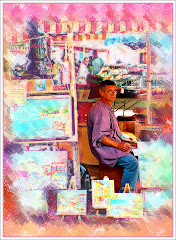
What is it about graveyards that interests me so much? It may be the fact that they are peaceful…and the older I get, the closer I come to a grave of my own. It may be that I find the things written on gravesites so awfully interesting. What exactly do people write as “lasting testimonies” for those who have died? The most commonly written word on those lonely tombstones was "Regrets" -- but I am getting ahead of myself.
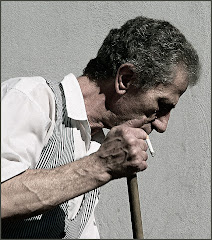
There was also talk about monkeys – lots of monkeys on the way to the graveyard. These are monkeys who appear in the expectation of bananas. Yup. Monkeys are cool – but it was the children’s cemetery that fascinated me.
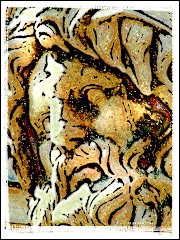
I admit it. I photographed the monkeys because, c'mon, you have to photograph monkeys. But I was obsessed with getting to the graveyard. I just knew there was something there for me to find.

But I am ahead of myself again. Let me go back to the "getting onto the island" part. As we got off the tender boat all the rest of the people headed left toward the building compound. We turned right on the pathway that ran alongside the sea.

Ruined buildings, many reduced to simple facades by the twin ravages of time and sea, dot the pathway. They appear at random times out of nowhere.

Sheree and I were together, creeping along pathways, until we got to the aforementioned monkeys. She loves monkeys. I think they're cute and all...but there's an actual graveyard here somewhere. No contest.

I saw Hutch, walking up the trail toward us. I asked him where the graveyard was and he jerked a finger over his shoulder and muttered something about it being behind him.

I muttered something to Sheree about going onward and she muttered something back as she concentrated on photographing the monkeys. I don't think either of us actually heard the other one as our brains were otherwise engaged.

I walked on down the island path and eventually I came to a tromped down area in the bushes to my right. Was this it? The sunlight was playing on the trees and a shadowed archway of foliage within like an invitation. My heartbeat quickened. Honest it did. I walked into it.

For a few moments, and yes I made them last as long as possible, I was living in the pages of a novel. The air was vibrant and green, full of the promise of adventure. Green plants crunched underfoot and the idea that there might even be a snake lurking inside them just an inch from my sandaled foot was as intoxicating as it was frightening.

I was alone on Devil's Island and there was a by God real children's cemetary just feet away from me. It doesn't get better than this.

I passed through the trees and saw ancient wrought iron gates. Written upon them in French were the words "Cimi..... Des enfants." (The picture is at the top of this blog.) There was sunlight dappling the graves and the far off sound of insects and the thrum of tropical life. And I was alone, for a precious ten minutes, in the graveyard of Devil’s Island’s dead children.

I walked into the cemetery, my camera hanging unused around my neck. I paused there, with my eyes closed and breathed deep. I thought about the parents – guards and their wives – carrying their children to their last rest. Maybe they wept. Maybe they stood stoically while their children were put in the ground.

Think what you want – but the magic of this place was here for an instant…a magical fragment of time. I fancied I could hear the sounds of voices long gone and the grief they must have felt.

I couldn’t keep it to myself and I re-traced my steps to find Sheree – who was still photographing monkeys.

“Come with me,” I said. “The light…the colors. You need to come with me.”

My wife trusts me and she stepped away reluctantly from photographing monkeys. I really wanted her to feel what I'd felt. I took her through the pathway I had found in the trees. I prayed the place would still be silent and crackling with atmosphere so she could feel it too. Of course it is sometimes hard for me to know what she is feeling, because Sheree lives in the moment, regardless of where she is.

This time the graveyard wasn’t the same. A man and his family had arrived while I was gone. He leaned casually against a gravestone. He chatted with his family and made jokes about the dead people planted there. His harsh voice and the braying and forced sounding laughter of the women threw a new and unwelcome atmosphere over the graveyard. Dignity fled in the face of those sounds and we were standing in a place with tourists. I sighed.

Sheree photographed gravesites…and I did too. But there was a different feel here now. It wasn’t precious and private anymore. I so wished Sheree had been with me the first time.

We spent time here and the minutes started to slide away. They became "lots of minutes" – and by the time we moved up into the Devil’s Island compound we had only an hour to make the tender back to the ship.

The difficulty was that we had no idea where the tender boat was. We'd struck off in the opposite direction upon arrival. All the instructions had been given using the building compound as a reference point and, to be honest, I had been concentrating on getting to the graveyard and hadn't really paid much attention.

We had no reference point. We had only 25 minutes to find the tender boat...not enough time to re-trace our steps around the coast of the island. Sheree was photographing what she called “cute fat little guys” – which were huge rodents native to the island. She paid no attention to the time and I had noticed there were no other cruise ship people around. Everyone was long gone. Everyone.

I went to the hotel, the only remaining business on the island, and asked the woman behind the bar for directions. She spoke only French. Despite being Canadian, the only French I know has been gleaned from examination of cereal boxes. My sense of isloation grew.

I tried showing her with my hands what a ship looked like. I tried talking very loud and slowly. (I don't know why I thought speaking slowly would make me any more understandable, but I did.) She didn’t understand. Finally she went to fetch an old guy who came around. He spoke a smattering of English. He pointed down front of the main building and then jerked his thumb sharply to the right.

We had twenty minutes. Sheree went off to pee.

I looked down the path and was reasonably certain this was the right way. I waited for Sheree and when she finally re-appeared, we had twelve minutes.

I walked down the pathway – but an old french guy called out: “De boat?”

I nodded eagerly.

He pointed down a different path and we went that way, after profusely thanking him.

We walked down a cobblestone pathway, thick green trees on both sides. It was unfamiliar territory, but we spoke reassuring words to each other anyway.

I saw the tender boat some distance away. Sheree paused to make a picture of the Pacific Princess moored some distance away. I went to talk to the irritable security guy, Allen, while Sheree finished her pictures.

As we went away on the tender boat, I felt a profound sense of loss. There were so very many places on Devil’s Island we had no chance to see…to explore – or just sit and be quiet for a long moment in.

I loved Devil’s Island. I really wanted to stay there for at least another couple of hours. But that would have ended in a very long swim through apparently shark infested waters -- so I got onto the tender boat. It's not often a place speaks eloquently to my spirit, but this island spoke to mine.

It would be guilding the lilly to say that as the tender boat chugged away from Devil's Island that I thought I saw two ghostly children standing on the dock, arms around each other watching us leave with somber dark eyes. So I won't.

Travel Blog #11: The Momentus Event

I waken one morning. Sheree is clattering around the cabin. Doors opening and closing, drawers being ransacked great meat platters being dropped from thirty feet above. Okay. Maybe no meat platters. But it sounds that way. It is just before five and she is up and about. I, on the other hand, being a genuinely slothful man, lay in bed waiting for the noise to stop.

“What are you doing?” I ask with just enough irritation to let her know I mean business.

“Capturing the Amazon sunrise,” she says.

“Ah,” I retort, thinking quickly.

The door slams as she leaves and I am left with a dilemma. Do I go back to bed or do I throw on clothes and capture the sunrise with her? My body tells me that an Amazon sunrise is no big deal. My mind says I should haul my lazy ass out of bed and get some pictures. Then I thought of you guys – sitting in rapt attention before your computers, aching for the latest update, probably refreshing the screen every five seconds or so. Probably.

So I grabbed the camera, put on my Great Hat and headed for Deck 9. I have to tell you about the Momentous Event that occurred this morning.

Sheree was in conversation with a rail thin Oriental man and a guy who looked like retired army. Rather she was standing there with a bemused smile on her face while they faced off with each other.

“East that way,” insisted the Oriental guy.

“Well, the boat is headed into the Amazon,” Military Guy began patiently.

The Oriental guy jabs a finger toward the back of the ship.

“East there,” he says.

Military guy strokes his chin. This is how I can tell he is thinking. Finally he speaks.

“Well the boat is headed into the Amazon,” says he with certainty.

I am just out of bed and pissy enough to speculate whether he was taught that shrewd navigation at West Point. I mean we are on an AMAZON cruise. It’s pretty obvious that we are headed into the Amazon. I await the next pearl of wisdom that will drop uninvited from his lips. But there isn’t one. I smile at Sheree and she smiles back.

The captain knows where we are going.

We head out to the back deck, fingers poised over shutter buttons. But it is a grey morning. The water around us has turned a light brown. (Sheree is calling it “khaki – the color of chicken gravy” but she says I can’t use the metaphor. So I won’t. She is here, beside me on the balcony and we are both writing blogs.) Anyway – the water has turned a light brown. Ummm. Sort of the color of chicken gravy. Ahem.

There are chunks of plants floating on the water and the air is really humid. Putting the lens cap on a camera isn’t a good idea since the glass mists over almost immediately. You can’t see much through the glass doors because of the humidity. The air feels wet – like you just turned off a shower.

Anyway – I have to get back to the Momentous Event.

Said M.E. (Momentous Event) began as we got onto the Panorama Deck. This is where they put the buffet and progressively rounder tourists graze on rich food from early morning well into night. So many of my fellow travelers lack the will power to pass by food without eating it.
Following breakfast, we headed out to the back deck and there we saw two people huddled around rectangular handheld boxes.

I was curious enough to introduce myself and ask what the heck they were doing.

“These are GPS units,” said a man introducing himself as ‘Dennis from Bristol’ with more than a flicker of pride. “We are very close to the equator.”

He smiled in a way that invited me to enter into the excitement.

“We are less than two minutes away,” said the short birdlike woman, who later became known as ‘Thelma from Martha’s Vineyard.”

“Two minutes, huh?” I said. “Is that close?”

Simultaneously they both looked at me as though I’d grown a third eye in the middle of my forehead.

“Less than ten minutes,” said Dennis.

“She just said it was two minutes,” I observed.

“Well it takes about ten minutes to go two minutes,” said Dennis.

I looked at him and blinked. He liked that – which I thought he might.

“Position is measured in minutes and hours. When she said two minutes, she was referring to our position.” He paused to look down his pointy little nose at me. I was instantly back in college. “That is why it will take ten minutes to travel two minutes in position.”

He settled back with a self-satisfied look, folding his hands over his paunch.

“Do you think the captain will honk his hooter?” asked Thelma.

“Almost certainly,” said Dennis enthusiastically. “We should at the very least all give a cheer.”
I looked around at the other six sleepy tourists, sipping coffee and looking for all the world as though they could give a shit about crossing the equator.

“On the last cruise, we were all gathered on the deck,” began Thelma. “We were tracking our progress.” (I should point out that as she said ‘track our progress’ she sounded exactly like the president and sole member of the Science Club in High School.)

Dennis nodded excitedly. Since I sensed the tale was reaching its climax, I nodded too.

“But the captain honked his hooter nearly two hours early. He just wanted us to leave so he could get on with business. But we knew. We were tracking our progress.”

“Imagine that!” I said, aghast.

Dennis made a tisking sound and gave his head a sad little shake.

“Like we wouldn’t know he was lying?”

The three of us took a few seconds to contemplate the sad state of affairs the world has slid into when the captain of a south American ship prematurely honks his hooter. I broke the silence.

“So is there going to be a dotted white line?” I asked finally.

They both turned to look at me. I smiled back into blank faces – expecting at least a smile, if not gales of laughter.

“What?” asked Dennis.

“When we cross the equator will there be a dotted line?”

“There’s no line,” said Dennis evenly.

“No line,” agreed Thelma with a sharp birdlike nod.

“It’s on all the globes,” I said. “You can see it. There’s a line. Sometimes it’s solid. Sometimes it’s dotted. But there’s always a line.”

Thelma snorted. Not a pretty sound.

Dennis examined me for a long moment. “You’re having us on, eh?”

“Yes. I am,” I said.

Dennis made a sharp barking sound in what could only be considered a polite laugh. Thelma just glared at me. One of the sleepy passengers laughed out loud – bless his heart.

“Less than one minute,” said Thelma.

“What does that mean in terms of time?” I asked.

Dennis paused expansively and looked upward as he did the necessary calculations. “We are less than half a mile away from the equator. Roughly five minutes.”


“I do hope he hoots his hooter,” said Thelma.

“Me too,” I said.

They compared GPS settings and sure enough they were exactly the same.

“Three satellites are providing us the information right now,” said Dennis with an impressed looking shake of his head. “It’s really quite precise.”


“Less than one minute,” said Thelma.

“Ladies and gentlemen,” began Dennis. “May I have your attention please? We are about to cross the Equator. Perhaps we could do a countdown?”

Passengers on cruise ships are in a different state of mind. They will watch anything. Yesterday Sheree and I watched in rapt attention as a Filipino man did an ice sculpture demonstration, transforming a block of ice into a fish. It was mesmerizing. I actually applauded.

So crossing the equator was a pretty big deal.

“Less than thirty seconds,” Dennis announced.

“I hope he hoots his hooter,” said Thelma.

“I hope there’s a dotted line,” said I.

“FIVE…FOUR….THREE…TWO…ONE!”

Dennis gave a little whoop. Thelma pumped one fist in the air. I took a picture for you. It looks just like this.


That was it. No hooting hooters. No tap dancing dolphins. No change in the brown water.
Dennis and Thelma finished their celebrations and decided to go back to their cabins to lay down, presumably to recover from all the excitement.

Sheree and I took some pictures, swatted at a few bugs and then came here to write to you guys.

We get five hours on the legendary Devil's Island tomorrow. I have been looking forward to this since Sheree and I started talking about this trip in our bedroom ages ago. You remember Devil's Island, right? Steve McQueen and lepers and nasty prison guys.

I was really excited about being there. But I didn't know my most remarkable moments on Devil's Island would be spent with dead people. At the risk of sounding a little like a radio serial: I'll tell you about that tomorrow.