Wednesday, November 19, 2008

The Picture I Wish I'd Never Taken

Imagine inviting yourself over at someone's house -- someone you don't even know -- eating their food and then complaining about the way it was served. Now try to see yourself making snide comments about their home, the way they dress, what they do for a living. Think about being a real jerk and calling down their whole lifestyle.

Most of us wouldn't even consider being that rude, right? I mean -- it's unthinkable to behave so badly when you're a guest in someone's house.

A tourist is just someone visiting strangers in a really big house.

Take a close look at the image above. This is a street family in South America. The girl with the flowered top sells little boxes of Chicklets to the thousands of tourists who pour off the cruise ships. Mostly she stands on the dock, with a cardboard box raised and a shy smile frozen on her face. Most people walk past her without even looking her way.

Once in a while, someone stops and gives her a dollar for two pieces of gum. Sometimes someone shakes their finger in her face and lectures her about "begging" in a language she doesn't understand, although I suspect their message comes through loud and clear. But mostly, she is ignored.

My wife and I saw her walk back to her mother and little sister. They all sat against a stone wall together. I went over with my camera. I saw a picture I wanted to take: a street family with three clearly defined personalities and I began shooting. I had no second thoughts, no greeting. I just started taking their picture.

The mother buried her face in her youngest child's hair, while the middle child reached for her sister's arm, with this strangely impassive look on her face. In retrospect, what were they supposed to do? I'd like to think I left some money behind once I was done. I honestly don't remember.

But I should never ever have taken the picture. At least I shouldn't have taken it the way I did. Each time I look at the image of these people now, I wonder what they must have been feeling when this tourist from a country far away, pointed a camera at them and started taking their picture, like they were particularly interesting fire hydrants or buildings. There's a little pang of guilt each time I see it. Okay. A BIG pang of guilt.

In North America, we are the world's blessed people. We don't depend on selling a few mini boxes of Chicklets to survive. For most of us food and shelter have ceased to be issues. That's why we have the income to travel like we do. We consider poverty not being able to afford a new car or a plasma screen television. There are people -- many of them really small people -- who are literally just trying to get get enough to eat.

It was some years later when I came across this image that I started thinking about what I had done. I'd treated three people like "un-people." I'd been an Ugly Tourist. Yikes! That's a hard thing to admit to myself, let alone publish in the blog.

Since then, I have developed Five Rules For Visiting Other Places Without Being A Jerk.

1) If You Wouldn't Say It in Front of Your Host at Home, Don't Say It. Tourists often think that people in foreign countries can't understand what they are talking about. I've seen people say very nasty things about the place they're in, the food they're served or the behaviour of the "locals." Trust me. These people know. They spend their lives watching tourists. They know who you are. Be nice.

2) Try to Speak the Language. My Italian is horrid. I clearly remember being urged by my wife to ask a complete stranger on a train where our hotel was. I spoke in my halting Italian and watched as a very kind light came into her eyes. She at least knew I was trying. (She answered my question in near perfect English, by the way.) But I'd shown some respect for where I was visiting and that meant something to her.

3) Enjoy The Ride. Why do we travel? We want to see different places and different people, right? Don't get bent out of shape when things don't go your way. If it rains, it rains. If the taxi breaks down -- yelling at the driver accomplishes nothing. I've seen tourists rag on tour guides because the weather sucks, or there are too many bugs or the line-ups are too long. What must they think of us? My wife and I will often look at each other, smile and shrug and say something like "It's travel." So relax. It's all part of the trip.

4) Pay a Couple of Bucks For The Picture, Okay? Two or three dollars might not be much to us. It can be a whole lot more for third world families. Stop and smile. Raise your camera and ask if with your eyes if it's okay to take their picture. Give them a little money. You'll be amazed at what good models they can be. It's a great trade-off. You get a memorable image, they get some cash. I would be able to look at this image with pride if I'd done that...and I probably would have met some cool people. (A little further back in this blog I've written about one of those life-transforming experiences involving me trying to photograph a street person.)


5) Buy the Freaking Chicklets. I don't think I will ever see that kid again. But I won't pass the Chicklet vendors by again. There is, of course, a small risk here. Once the other kids see a tourist passing out money -- you run the risk of getting swamped. That's why I will have a couple of singles in my pocket, ready to go. I can very quietly give the money to one child and move on. I read recently about another traveler who gives out small toys and pencils to the kids. This is a great idea...except that you can't eat a pencil.

I keep thinking: "What must we look like to them?" Wave after wave of bloated tourists roll off the cruise ships waving Visa cards like swords and finding fault with everything around them.

On my first day in Jamaica, I asked the bartender for bottled water. I thought that was what we were supposed to do and frankly I didn't mean any insult. I remember the snapping anger in his eyes. It was there for just a moment and then he masked it by polishing the glasses in front of him. He muttered that there was nothing wrong with Jamaican water...but he gave me a bottle all the same.

It's about being a gracious guest. When you visit someone for dinner, you take a bottle of wine, right? Maybe some flowers...or a dessert. I've been on enough trips now where I am really starting to view myself as a guest in the country I'm visiting.

Try it.

You'll get better pictures, your travel experiences will be much richer and you will never look with shame upon the picture you should never have taken.

Our power is the money we bring. And we have this power because they are poor. But we are going to their homes. And I'd really rather be a welcome guest instead of a jerk.

Tuesday, November 18, 2008

Thinking About the Big Easy

This morning I wrote an article on "The Difference in New Orleans after Katrina." Since this blog is about travel, photography AND Photoshop, I want to share it with you.

The sun is warm on my skin and the air is ripe with the exotic scents of the Big Easy: green growing things, cigarette smoke and spilled beer.

We are in the French Quarter, watching the sun come up. I am seized by the notion that the atmosphere surrounding me is an odd blend of things manufactured for the tourists who choke these streets every night and a very real thing, an etherial "something" that is so uniquely and perfectly New Orleans. That mystical atmosphere is all around us, coiling around our spirits like an affable snake.

My wife and I have been here before. Ordinarily we avoid the Quarter. It has an ugly wild side. One evening there during our only Mardi Gras was more than enough. But mornings here are different. There's a lazy feeling in the Quarter, and it feels like watching a cat take a long stretch after a nap in a sliver of sunlight.

I nod to a man standing idly by a convenience store, smoking and drinking. I wonder if he has been out all night. He barely moves his head in response but I feel his red eyes on me.

"Morning," I say.

He takes a long draw on his drink.

"Morning," he says finally. The voice is deep, created with whiskey and smoke as much as genetics, I decide. There's suspicion in his eyes and a distant hostility there too. He turns and walks away from us, his steps uncertain. He is carrying himself with as much dignity as a man at the tail end of an all-nighter can muster.

I watch him walk away feeling every inch a tourist with my camera around my neck and my clean clothes. I will think back on this brief encounter many times over the next few days because that man personified the feeling I get as visit New Oreans for the first time since the storm came calling. This time, there's an attitude of waiting, a faint resentment and an underlying sense of betrayal from the people.

Later that day, we have scheduled a bus tour of the areas of New Orleans ravaged by Katrina.

We file onto the bus with the other tourists, cameras poised, and listen as our guide mirrors the same attitude as the man outside the convenience store.

"You been to the Quarter?" he asks. "How many you been to the Quarter?"

Everyone puts up their hand.

"When Katrina came, it barely touched the Quarter. We gonna see the places it DID touch."

The bus winds its way into a different New Orleans. The highway is something like a time machine because we leave the lights and siren songs of the tourist areas and head into devastation. Dozens, maybe hundreds, of houses are ripped open like fruit dropped from a great height.

Debris lies in oddly indifferent looking piles on either side of the street. Street lights are gone and I have the sensation of going into a third world country were half naked children will sell you Chicklets as their mothers look on with hungry eyes from a distance.

There are odd markings on many of the houses, numbers spray painted inside the frame of an "x."

"This tell the rescuers how many people in the house," says the guide. "Sometime it tell them how many died in there. Sometime it tell them what houses gotta be torn down."

The guide's attitude is reserved. I keep getting the idea that he is showing us something very private and he is conflicted about it.

He tells us about how many people ignored the warnings that devastation was rumbling their way because they got warnings all the time. He tells us about people who drowned in their own attics because they failed to take something with which to cut a hole in their roofs when the water came for them. He tells us about the levees in which they had trusted that fell like tinker toys before the fury of the storm.

Finally he tells us about how they had believed in a government that would come and help in times of great need...and how they were still waiting.

What's the difference between pre and post Katrina? It's not the horror of the destroyed buildings. Nor is it the devastating death toll. It's the people.

Katrina ripped into the collective heart of New Orleans and turned a genuine "glad to see you" smile into something much darker, jaded and distantly desperate.

For the balance of my time there, I really sense a different New Orleans. Something seems forced, like a willful denial that life there can never be the same again. It feels to me, with an inward twinge, as though I am no longer in the "City that Care Forgot." I think deep inside, that the carefree city was sucked into a vortex of indifference and death and will never ever be seen again.

Of couse I hope I am wrong.

I truly do.

Monday, November 17, 2008

Funeral Images...

Photography and Photoshop are wonderful ways to reach out to other people and touch lives you never know about. Sometimes the projects they inspire bring completely unexpected news.

Take the image to the left. I took it two summers ago. The man was a conductor on a streetcar we were riding with our grandchildren. He oozed life. He teased the kids and laughed out loud and made the brief trip so very memorable that I wanted to say thank you in a very direct way.

I used the image and worked on it using several layerings: Snap Art from Alien Skin, Virtual Artist and some brush techniques. I used a filter from Auto FX to design the lettering and still another filter to create the stamp effect.

I sent the image off to the people who host the historical streetcar...and never heard a word. Inwardly I shrugged, because this happens a lot. But you don't give a gift in the expectation of a thank you, right?

About a year later I got an email from a name I didn't recognize. Since most of these turn out to be spam from people who think I am unhappy with my body, performance or weight, my finger hovered over the "delete" button. But it was from the son in law of the man in the photo.


Briefly here's the story: the man in the image had died. His daughter found this image all over his computer. It made her very emotional because she said it depicted him at in a place near the end of his life where he was genuinely happy. They took the image and used it as the cover of the funeral service brochure. They had no idea where it came from until they found my email to him. They wrote with apologies and thanks and in the sincere hope that it was okay that they used the image.

Of course it was.

I was thinking that I fired some artwork off into the abyss that is the Internet, heard nothing, and yet it had a real impact on lives I never knew about. I am just naive enough to think that's cool.

Some of you have emailed to ask about the Biker Image in the previous blog. The client had taken some pictures of this guy a few days before his death...but she didn't have anything that was really working for her.

This was tough because I didn't know the guy at all. But she really wanted an image that made who he had been into a powerful statement. I took the shot of the biker riding away, selected the bike and turned the rest of the image (except for the highway markings) black and white. Obviously, I wanted the color of the leading lines to go to the biker.

The sky in the intial image was very bland, so I combined several filters (Glitterato from Flaming Pear and Fuzzy Clouds from Alien Skin), changed the opacity and made that soft kind of etherial sky backdrop. I added a slight glow to the horizon to give it a more dreamlike feel.

Finally, I took another image of his face smiling, and blended it into the clouds using the "Overlay" blend. (If you haven't played around with blending options -- found at the top of the Layers menu -- you're ignoring a wonderful option from the Photoshop world).

And presto! Another image graces a funeral program. It was really a strange feeling, both times, to have done a visual representation of someone I've never known. It's also strange to think that these images are tucked away and forgotten in drawers and on the hard drives of people I will never meet. There's a pithy metaphor tucked away inside this somewhere.

I think about it sometimes: an idea sparks into life inside imagination, the idea transforms into an image on a computer screen -- and the image speaks to a group of people several worlds away from mine. At what point does the image take on a life of its own...and start its own hundreds of tiny journeys. Who sees it? How does it make them feel? Do they live in distant countries?

We live in a world where art and ideas, concepts and dreams, enjoy a global trajectory with just a nanosecond between the publishing of the art and the eyes of the audience.

I think that's PDC. (Pretty Damn Cool.)

Wednesday, November 12, 2008

"Where have you BEEN?"

This image is for the funeral for a biker I never knew. It was commissioned by a student of my wife, who actually took the pictures. I just did the post processing. But I am pleased with the way it turned out. This was the cover to the funeral service. Cool, huh?

I look at the blog and I think: what should we cover today?

All conventional blog wisdom says that you really need to post something every day so that you develop committed readers that come back over and over again. This makes sense. I need to encourage you folks to subscribe so you get updates each time the muse moves me to write something down so you KNOW the very instant these pearls of wisdom drip from my lips – or more appropriately – this laptop.

But if I wrote something every day, two things would have to be different:

1) I’d have to be making money at this. Since I am self employed, I need to make the things that take my time make money. This blog may one day do that, either by selling the courses at
http://www.photoshopbasics.com or with advertising.

2) I’d have to have something to say every day. And I don’t. So if I wrote all the time, I’d wind up talking about things that don’t interest me much and that would result in a great steaming pile of cyberpoop delivered fresh to the reader every day.

I can state with certainty that I have wanted to write every single blog so far. It may have been a new photography technique or something cool I learned in Photoshop. Sometimes it had to do with a place I had been and really wanted to tell you about. But I’ve never written a blog “just because.” I respect both your time and mine too much to clog it with junk.

Having said all that, you should know that I am always thinking about you guys. When I am on a trip, I think of what aspects I’d really like to share with you. I want it to be like you are standing right beside me, looking at these wonderful people, sharing the travel experience with me. Isn’t that what real writing is all about? When I am working in Photoshop or behind a camera, I am usually wondering if I have learned something useful enough to do a blog on it.

It’s not that I don’t appreciate the emails from you folks wondering what’s happening. I do. It reminds me that I am not talking to myself. Keep in mind that I am still running the special events company, doing magic shows and doing a great heaping bunch of my own writing and photography projects.

There’s some very cool stuff in the future: Sheree and I have planned two wonderful trips for 2009.

We’re leaving New Year’s Eve for a trip down the Amazon. I am trying very hard not to count the sleeps, but this promises to be a fabulous adventure into South America, Devil’s Island and all points in between and beyond. I may be able to talk Sheree into taking a side trip to a place I’ve only been to once, but has elevated itself into legendary status in my mind: Key West. We’ll see.

In April, we’re taking a trans Atlantic crossing (which sounds just too cool to NOT get all excited about.) We’re winding up in Southampton, England and will visit some friends we’ve made on flickr. We’ll also visit the countries that make up a little over half of me: Ireland and England. And Paris. (Did you just hear me sigh? I did.) I am literally aching to travel and see more of this great world and the people who live in it. I am dying to photograph them and bring it home to you…whoever and wherever you may be.

So I will be around. And if I see something I’d like to tell you about, or a flickr artist or a Photoshop technique, I will be posting here. But we are coming up on high season, so I don’t know how much spare time I will have.

Let me suggest that you SUBSCRIBE to this blog. You’ll find the button up top in the upper right hand corner. That way you’ll know when I’ve got something new for you.

Until then – be well, take lots of pictures and relax: it’s only a digital world.

Okay?

Okay.

Monday, October 27, 2008

Wander Lust, Photoshop CS4 and Some Excellent Bloggers

When my grandson lived with us, we packed him along on many of the trips we made. I still have this crystal clear image: this little three year old body waddling up to me, pulling on my pant leg until he had my complete attention, and then pointing off to the side.

“I think we should go havealook,” he’d say making very direct eye contact.

That’s not a typo, by the way. “Havealook” was all one word to Perrin. It meant: “There’s something over there I think we should see. Let’s go exploring. C’mon…let’s go havealook.”

The phrase stuck with Sheree and me. When are preparing for a trip and are going about the happy business of packing up the cameras and joyfully speculating about the things we’ll need to take and the challenges we might encounter, we’ll often tell each other we are going to “havealook.”

The word conjures up the kind of warm memories that make us smile.

I am just about dying to go havealook. It’s been nearly two months since we went somewhere and, while that may sound odd to you, I am suffering from travel withdrawal. It isn’t pretty. I gaze at images I took in Rome and New York and Hawaii and New Orleans and…and all those places…and I sigh.

Our next trip, which will take us down the Amazon River, doesn’t begin until New Year’s eve. Yup. While others are ringing in 2009, Sheree and I will be on a tarmac, waiting to take off. There’s something I really like about that. It fits who we are perfectly.

But for now, I am looking down the barrel of yet another Christmas season, fighting my way through the snow, performing show after show as I watch the days tick down one by one. Don’t get me wrong. I am happy doing magic shows but, you see, I have these progressively itchier feet. And they want to take me to places where I can make photographs and meet new people and be somewhere utterly new to me. Who am I to argue with my feet?

One of my favorite writers is Bill Bryson. In his classic book “Neither Here Nor There,” he writes with great passion about the joy of being in a place where they don’t speak your language, where their customs are completely different, where simply crossing the street is an adventure. That passage really speaks to my heart. There’s a wonder-lust that travels hand in hand with a travel lifestyle that creates a deep ache to explore this big wonderful world.

I am not talking about vacations. Nope. I am talking about TRAVEL: getting up with the sun, and watching dawn come up on an exotic place. I am talking about sipping your morning coffee made in a completely different way, the looks the locals give you when they realize you are valiantly trying to speak their language and the warm smiles they offer. I am talking about new smells and different art and architecture and history and people.

I am talking specifically about trying to think of how to convey that travel experience with a picture and going back to the hotel ONLY after it’s become too dark to take pictures…ignoring throbbing feet because you can hardly wait to see the images of the day…and (in my case anyway) share them with your partner.

I blame my wife for this, by the way. Sheree has infected me with a real desire to see the world and a very genuine ache to peek around the next bend in the world to havealook. I was a perfectly well mannered little hobbit who never had any nasty adventures at all before I met her.

Ahem.

**sigh**

CS4 Is Here!

I have been happily playing with Photoshop CS4 for about a week now. Ooops. Did I say “playing?” I actually meant, “Making a very serious and evaluative examination of this new digital editing software.”

It’s much faster than CS3 and it’s easier to use. That alone is worth the price of an upgrade, which is just a hair under two hundred bucks. There’s not a LOT of new stuff. It seems to me as though Adobe was looking to clear up many of the annoying things that made CS3 a wee bit of a pain to use.

I am especially taken with the Vibrance Adjustment Mask. If you own this software, or are playing with one of those nifty 30 day trials offered by Adobe, I think you’ll enjoy it too.

Here are two images. (It's an air traffic control tower we went to in Mexico. You can go to the top for one American Dollar...but don't get me started on that whole travel thing again) One has been treated with the Vibrance Mask…the other hasn't.
If you can't tell which is which, check your pulse. The differences are subtle but at least a 9 on the "Way Cool" scale.

Adobe didn’t make the one change I have been praying for. The most wonderful thing about Lightroom, to my mind, is that the Crop Tool features a changing Rule of Thirds grid, so you can get precise crops and really use your Dynamic Points. There are Photoshop plug-ins that sort of simulate it…and you COULD go from LR to Photoshop (which is the idea anyway) but every time a new edition of PS comes out, this is the first thing I look for.

Ah well.

Most of the rest of the changes are subtle but quite wonderful. Photoshoppers are in a tizzy of delight about CS4. In my humble opinion, it’s CS3 only way better.

Several of you have emailed and asked if I recommend upgrading. If you’re using CS2 or earlier…and you haven’t upgraded yet, you really need to give your head a shake. CS3 was a HUGE improvement on CS2. If you’re happy with CS3 being just a little clunky to use, wait for the next upgrade.

A FEW BLOG NOTES
I only read three blogs on a regular basis. They all have to do with Photography or Photoshop.
The first is by Sheree. She blogs for Picajet. If you’re interested in travel and travel photography, let me strongly suggest that you check her work out. I’d read it even if I wasn’t married to her.

The second that is becoming a HUGE favorite is by a friend of mine in Ireland. He’s Stephen Power and he’s been running a fascinating series on street photography as well as the nuts and bolts of being a professional photographer. You’ll find him intelligent and concise with a delightful writing style.

The superstar of Photoshop is Scott Kelby. Most of the things I have learned about Photoshop, I learned from his books. His blog is outstanding. He also runs NAPP – the National Association of Photoshop Professionals. I’ve been a member for years. It’s a fabulous resource for graphic artists of ALL skill levels. Membership is the best money you'll ever invest.

They are all well worth a read. The links to ALL are in the upper right hand corner of this blog. I’ve put them there instead of here, so you will always be able to find them.

See how I look out for you guys?

Monday, October 20, 2008

Making Junk Into Beautiful "Junque"

We were driving down a back road in Spruce Grove on an impromptu "photo safari" when my wife spun around and made an undignified squawking sound. This usually signals the fact that we have just driven by something that will make an awesome picture.

I was looking the other way, as is my custom.

“Did you see that?” she exclaimed.

“Ummm…” I began.

“There was a metal castle over there!”

“Were there flying monkeys circling the turrets?” I asked.

She didn’t respond to this extremely witty comment, but flipped the car around and drove back down the road. Sure enough, just inside a junk yard was this huge metal castle. I stifled my own squawking sound and grabbed my camera. The sun was just setting and there were ribbons of color in the sky, but the light was fading.

I started taking pictures: an abandoned bus out front of the junk yard, the weather-beaten signage and, of course, the metal castle. A big machine started rolling my way. In the cab was a little old guy who looked like he just might be the elf that lived in the castle.

I was half-right.

“Do you like my castle?” he asked, swinging down from the seat. He’s a genial guy who introduces himself as “Frank. Just Frank.”

I nod, taking a few more photographs just in case he's getting ready to kick me off his land.

“I made it,” he said. “I made that castle from scrap metal.”

His voice has a heavy Slavic accent but he regards the metal structure with a fondness I recognize as coming from someone who has built something that is seriously cool.

My eyes scan the area behind him. Cars in various stages of getting ripped up, junk metal, appliances and even a coffin are arranged in relatively neat piles on the grounds behind me.

"I found that coffin along the highway," he says.

"Was it...empty?" I ask.

He nods. "Yeah. Yeah. Found another one too. Empty. Very good quality."

I am speculating as to how empty coffins wind up littering Alberta highways when Frank nods his head in the direction of a “pick me up” truck and I follow. He shows me a picture of a much bigger castle. “I used to live in this,” he says. “But I gave it to my wife and when she divorced me, she sold it.”

I nod in sympathy as though I hear a story about "castle selling ex-wives" every other day. He shrugs and we both gaze silently at the picture again. This is an interesting castle-building-coffin-finding-artist kinda guy, I think.

“I got twenty Cadillacs too,” he volunteers suddenly. “From 1959 and on up. I rebuild ‘em. I don’t sell ‘em. I just keep them.”

I ask him a couple of times in a couple of different ways why he has twenty Caddys. He explains back a couple of different times, that he just likes to rebuild them and keep them.

...okay...

Frank makes a jerking movement with his head and I follow him into a lean-to where a large white cloth covers a car.


He lifts the corner of the cloth and shows me a white caddy. Reluctantly, he poses for a picture with his latest project…and I ask him finally if it’s okay for Sheree and me take a few photos.

He looks at me for a long moment and then shrugs and says it’s okay with him if we’re careful.

We are kids in a candy store, trying to shoot as much as humanly possible as the light fades.

Everywhere we look are images begging to be captured. Old cars, for example, really interest me. It’s not because I am a “car guy.” I’m not. But I look at these crushed piles of metal and twisted struts and invariably think: “Yeah. Someone somewhere drove each one of these off the lot when they were brand new. Someone was proud to own them. Someone made a pile of payments on them. And now they’re here. Scrap metal.”

I am still experimenting with HDR (see the previous blog) and other than the single shot of Frank by the car, these are HDR images – all the more challenging to take because my ISO was cranked to 800 to combat the creeping darkness…and I was handholding the camera.

Everywhere we looked was an amazing photo.

Is there a junkyard near you? Here are my Five Top Tips For Photographing Junk:

1) Spend a little time with the owner. You’ll meet someone interesting…and you’ll make them inclined to let you make some photographs of their stuff. (This means also going back there to drop off some of the pictures you took…these guys can be fabulous contacts.)

2) You need dramatic light to make it work. Sunrise is good. So is sunset.

3) Take TONS of images. Don’t be afraid to bracket or try wild varieties of settings. While it is true that most of it will suck, some of it won’t. And some of it will be wonderful! Delete what doesn’t work. Relax: it’s digital. (If your camera has a SUNSET setting, this will accent all those wonderful rich colors. Try using it and see what happens.)

4) Walk around your subject and think about the angles you might want to shoot. Remember that in a junk yard there are TONS of distractions that will show up in your image as clutter. Keep a very tight mental focus on the subject of your image – and ensure that whatever else you add to the graphic has a reason for being there.

5) Rust is beautiful. When you’re doing post-production in Photoshop, you will find that the Brightness/Contrast slider in Image> Adjustments can be your best friend. You will get some fabulous contrasts and colors.

Thursday, October 16, 2008

HDR For Dummies...Like Me

HDR stands for “High Dynamic Range.” People are excited about this process, even though most aren’t entirely sure what it is. Here’s an over-simplified definition: HDR combines the best of three or more exposures to give you a picture you could not possibly get otherwise.

Your camera “sees” the world one way. Take this farm shot, as an example. If you focus on the sky, you’ll get a great exposure of the sky. If you want the buildings, you’ll get a great shot of the buildings but that lovely sky will be lost. You get the idea, right? Your camera will decide on ONE area of the photo to expose…and the other aspects of a “full spectrum” picture will be lost or weakened.

The traditional way to handle this would be to take the best exposure and selectively dodge and/or burn and apply filters to the areas with the poorest exposures to bring up the detail.

When setting up for an HDR exposure, you’ll need to set your camera on a tripod and BRACKET three exposures. Most cameras do this – you’ll need to make the change inside your camera menu. When you’ve composed the shot and half pressed the shutter button to lock the focus, press it all the way down and hold it. You’ll take three very fast exposures. One will look too dark, the next too light and the third will be close to perfect.

Traditionally, you bracket to make sure you get at least one good exposure.

But to make an HDR image, you are going to use all three exposures. The HDR process takes the very best elements of ALL THREE exposures and blends them together. That’s what results in the strange look HDR work carries. You don’t expect to see these kinds of images…because it’s much closer to what your eye sees.

I’ve purchased some outstanding software, Photomatix, to help me do this. You can download a trial through http://www.hdrsoft.com/ and play around with it. The software is designed to do the HDR math for you. Since math isn’t my strongest suit, this fills my heart with happiness. The software will set you back about a hundred dollars. (Note: If you type “VPG8” into the coupon area, you’ll get 15% off the purchase price. This is a great tip for purchasing software by the way. Google “Photomatix Discount Coupon” and see what comes up. I do this for EVERY bit of software I purchase and have saved big bucks on stuff I was going to buy anyway…)


Here are a couple of initial tips about HDR:

1) You need either a tripod, a “jam”, a rock steady hand or a subject that isn’t moving. Remember that, even though the camera takes the shots very quickly, your subject could be moving just a little. This results in a “ghost” effect. All of these shots I took by hand (as in “no tripod” or “jam.)

2) If your subject moves…you’re dead. This makes people, animal and sports shots really difficult. Don’t even go there. Your HDR will be a mess.

3) With Photomatix, the HDR creation is a two phase process. In the first, you choose the three exposures you plan to use. This results in a really awful image. You take those three exposures to the next phase, which allows you to refine the settings.

4) When I am reasonably happy with the exposure, I will save the image as a .jpeg.

5) I will then open the image in Photoshop and complete the editing.

6) I will sit back and make “ooooo” and “ahhhh” sounds as I look at the image until I feel satisfied.

There’s something magical about HDR. We saw some awesome samples with Alesandro’s work a few blogs back. There’s no denying that the effect is nearly ethereal.

When you’re editing in Photoshop, you are going to see some very strange effects unless your camera has been absolutely still during the photo taking process. You’ll have to be ready to clone and heal and otherwise re-define the image to make it work as a photograph.

I find a good HDR image breathtaking. But at the back of my mind I wonder what the “HDR Age” will do to traditional photography. My wife, for example, appreciates the visual power of HDR but has no intention of working with it herself. She’s a purist in the very most basic definition of the word. She’ll kick up contrast and do some cropping – but what you see is essentially the shot she took.

There’s skill to photography and there’s skill to HDR. I have the same feeling about HDR as I do about an overly Photoshopped image. One is photography and the other is digital art. They are related but completely separate disciplines. I believe they can co-exist quite nicely.

Here’s a strange idea: how do you think an HDR image would do when translated to Black and White? It’s something I am playing with and I’ll post the results here if I get anything decent.

Some of you have written in about the flickr artists profiling we have been doing lately. I have proposals out to several artists I’d like to showcase. But it’s ultimately up to them. I love looking at their work and apparently, you folks love seeing it. So look for more in the near future.
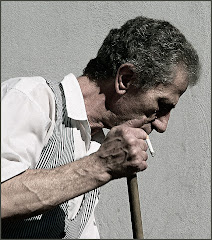
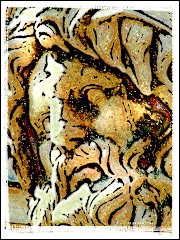
If you have any thoughts about HDR…or would like to post an image…I’d love to hear from you.